





HAIR CARE / POROSITY
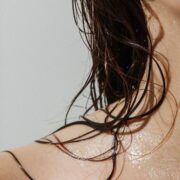
High-porosity curls often need more than another scoop of cream. A routine built around conditioning, protection and smarter product layering can help weathered hair feel softer and stay easier to manage.
If your curls can drink up an entire leave-in and somehow feel rough again by dinner, you have probably heard the words high porosity.
It is one of the most popular labels in curly-hair care, usually accompanied by a familiar list of instructions: pile on the moisture, layer several products, seal everything with oil and whatever you do, do not let that water escape.
The science is a little more interesting than that.
Hair really is porous. Researchers can measure the spaces within the fibre and have shown that bleaching and other forms of damage can change that internal structure. A 2024 study using thermoporometry, a laboratory technique that measures pore characteristics, found differences between virgin and bleached hair. Earlier research using gas sorption has also shown that damage can increase pore volume and internal surface area.
But porosity is not simply a trapdoor deciding whether water is allowed into your hair. Even relatively undamaged hair interacts readily with water, and chemically damaged hair can absorb, hold and release it differently.
So a good high-porosity routine is less about trapping as much “moisture” as possible and more about making a weathered fibre smoother, easier to detangle and less vulnerable to additional damage.
First, make sure porosity is the useful part of the diagnosis
High porosity is often discussed as though it were a curl type. It is not. You can have waves, loose curls or tight curls with relatively intact hair, highly weathered hair or different levels of damage along the same head.
In practice, the high-porosity label tends to be most useful when your hair has a history that makes increased porosity plausible. Think repeated bleaching, permanent colour, chemical straightening, frequent high heat or significant mechanical weathering.
You may also notice that older ends behave very differently from newer growth. They tangle faster, feel rougher, lose that conditioned feeling sooner or need noticeably more help to feel smooth.
That difference makes sense. The ends have simply lived through more wash days, detangling sessions, weather, heat and styling than the hair growing near your scalp.
What I would not do is diagnose your entire head from one strand floating or sinking in a glass of water. Laboratory researchers measure porosity with methods such as gas sorption and thermoporometry. A strand sitting on the surface of your drinking glass is also being affected by surface tension, product residue and the physical characteristics of that particular hair.
You do not need a perfect porosity score to build a useful routine. You need to notice which parts of your hair feel weathered and how they respond after washing and conditioning.
Older or processed sections feel much rougher than your roots.
Your hair tangles easily even when you are gentle.
Bleached, coloured or heat-styled areas need substantially more conditioning.
Your ends lose their smooth feeling quickly between washes.
You see more splitting or breakage through highly processed areas.
Those observations tell you more about your routine than a single viral porosity test.
Wash the scalp well without turning the lengths into collateral damage
High-porosity hair does not need to live in fear of shampoo.
If you regularly use creams, gels, oils and leave-ins, cleansing is what keeps all of those useful products from becoming an increasingly complicated layer of residue. Dermatologists recommend concentrating shampoo primarily at the scalp so you can remove oil, skin debris and buildup without unnecessarily scrubbing the lengths.
Let the lather and rinse water travel through the hair, then assess what you have left. If the lengths still feel coated after your normal shampoo, an occasional clarifying wash may be helpful.
The frequency should come from your scalp, your styling habits and how the hair feels, not from the porosity label alone.
And once the hair is clean, move gently. Wet hair changes mechanically when it takes up water, and damaged hair has already lost some of its structural resilience. This is not the moment for an aggressive detangling session with no conditioner in sight.
Make conditioner the star of the routine
If there is one place I would spend my attention with weathered, porous curls, it is here.
Conditioning ingredients deposit onto the hair and reduce the friction between fibres. That matters because damaged hair tends to have a rougher surface, making strands more likely to catch against one another.
A 2026 study comparing common conditioning agents found major differences in how effectively those ingredients deposited onto hair. Better-performing conditioners substantially reduced the force required to comb wet fibres, even though they did not reverse the underlying oxidative damage.
That distinction is important.
Your conditioner does not have to rebuild the strand into virgin hair to make damaged curls dramatically nicer to live with. Smoother, more lubricated hair can mean easier detangling, less resistance and a better styling surface.
Work your conditioner through the entire length if your curls are dry, paying special attention to the older ends. Dense hair usually benefits from sections so the inner layers receive the same treatment as the curls sitting on top.
Then detangle while the hair is slippery rather than waiting until you have rinsed away all that help.
For high-porosity curls, softness is not about drowning the hair in product. It is about reducing friction where the fibre needs the most help.
Use your leave-in where the softness disappears first
You do not have to distribute every styling product from scalp to ends with mathematical equality.
If your newest growth feels fantastic after rinse-out conditioner but your last four inches turn rough as soon as they dry, put the extra conditioning there.
A leave-in conditioner can extend some of the smoothing and detangling benefits of wash-day conditioner after you leave the shower. Dermatologists specifically recommend leave-in conditioners for hair that is curly, dry, brittle, long, heat styled or chemically treated.
Apply enough to give the weathered sections slip and softness, then stop.
This is where high-porosity routines sometimes become unnecessarily enormous. Leave-in becomes cream, cream becomes butter, butter becomes oil, and suddenly the curls have received five conditioning layers before the gel even appears.
If your hair loves that, fine. If it becomes greasy, dull or strangely rough, more layers are not automatically better care.
I would rather see one well-chosen leave-in distributed beautifully than four products sitting on top of one another because a porosity chart demanded them.
Then give all that softness some structure
One of the easiest ways to end up disappointed with a very conditioning-heavy routine is to forget about hold.
Your curls feel wonderfully soft while wet. They look juicy and perfectly clumped. Then they dry, expand and lose definition much faster than you wanted.
That is not necessarily proof that they need another moisturizer.
They may need a styler.
A gel, jelly or mousse can form a film around the hair that helps the finished curl resist movement and retain its shape. You can choose the format according to how much hold and weight your hair likes.
If you want a simple high-porosity styling routine, try leave-in plus gel before building a five-product stack. If your hair needs more richness, add a cream between them. If cream makes everything heavy, remove it.
There is no scientifically required LOC or LCO sequence for high-porosity hair. What matters is whether the combination gives you softness, manageable friction and enough styling support without leaving the hair overloaded.
1. Cleanse.
Focus shampoo at the scalp and clarify when buildup calls for it.
2. Condition generously.
Work in sections and give the weathered lengths plenty of slip.
3. Leave in what you need.
Concentrate extra conditioning on the driest areas rather than automatically coating every root.
4. Add hold.
Use gel, jelly or mousse to help preserve the curl pattern.
5. Dry gently.
Keep heat reasonable and avoid unnecessary manipulation.
Oil can help, but it is not a waterproof lid
The phrase “seal in moisture” has done a lot of work in porosity conversations.
Oil can absolutely be useful. It can change lubrication, shine, friction and the feel of the hair surface. Some oils can also penetrate the fibre to different degrees.
Coconut oil has particularly good evidence behind it. Classic research found that coconut oil could penetrate human hair and reduce protein loss during grooming, and a 2024 study confirmed that penetration differs among plant oils depending partly on their triglyceride composition.
That does not mean every high-porosity head needs coconut oil, nor does it mean coating wet hair with oil creates an impermeable barrier that traps every water molecule inside.
Use oil for the result you can observe.
If a small amount before shampooing makes your ends feel better, keep it. If a drop after styling gives you the shine and slip you like, lovely. If oil makes your curls limp, coated or harder to cleanse, you are allowed to leave it on the shelf.
The routine should serve the hair, not complete a diagram.
The best porosity treatment may be preventing more porosity
This is the part that deserves more attention than another mask.
If increased porosity is partly the result of damage, reducing repeated damage is one of the most useful things you can do for the hair that has not been damaged yet.
Bleaching changes hair profoundly enough that researchers can measure differences in pore characteristics and water behaviour between bleached and untreated fibres. Heat, permanent colouring and mechanical wear can add their own forms of weathering.
So protect your new growth from becoming the next rough section.
Use reasonable heat and a heat protectant when appropriate. Detangle with conditioner and enough slip. Avoid repeatedly pulling tight styles over the same areas. Protect curls from excessive friction while sleeping. Space out aggressive chemical processing where possible.
You cannot permanently repair a split or heavily weathered fibre back to the condition it had when it first emerged from the scalp. Cosmetic treatments can make it smoother, stronger-feeling and easier to manage, which is still extremely valuable.
But prevention gives the newer hair a much easier future.
Your roots and ends may need completely different routines
This is probably the biggest reason I would not build your entire routine around one porosity label.
Your roots may be relatively intact.
Your mid-lengths may have old colour.
Your ends may have survived bleach, heat, summers, winters and several eras of your personal styling philosophy.
That is three different histories on one strand.
If your ends need a rich conditioner and leave-in while your roots need almost nothing, treat them differently. If one highlighted section tangles more than the untouched hair underneath, give that section more protection. If you cut away damaged lengths and suddenly your old “high-porosity routine” feels absurdly heavy, change it.
Porosity is useful when it helps explain what your hair is doing. It stops being useful when it becomes a rulebook you are afraid to break.
The best routine for high-porosity curls is the one that keeps weathered hair conditioned, protected and easy to style while helping the newer hair stay in better condition for longer.
Disclaimer: This article provides general hair-care information and is not a substitute for advice from a dermatologist or other qualified healthcare professional. Persistent breakage, scalp changes or sudden hair loss should be evaluated by a healthcare professional.