
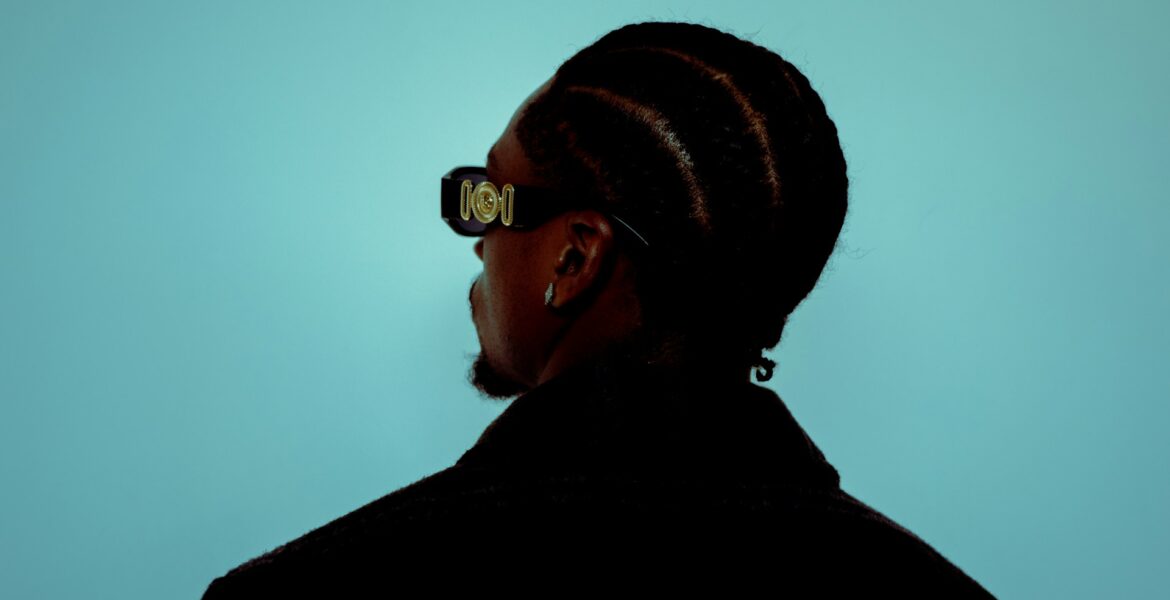
HAIR HISTORY / BRAIDS & TWISTS
Braids and cornrows may cycle in and out of beauty trends, but the techniques behind them are much older than the trend cycle—and for many Black communities, they have carried meaning far beyond style.
Braids did not begin on Instagram, at a music festival or on a celebrity red carpet.
Humans have been braiding hair for thousands of years across different parts of the world. But braiding, twisting and intricately patterned hairstyles have especially deep histories across African societies, where hair could be practical, decorative and socially meaningful all at once.
And that history is not one straight line from “Africa” to the styles we wear today.
The continent contains thousands of cultures, and the meaning of a hairstyle could change completely depending on where—and when—you were looking.
How far back does hair braiding actually go?
Very far.
Physical and artistic evidence shows elaborate braided hairstyles in the ancient world. The Metropolitan Museum of Art, for example, holds human-hair braids from an Egyptian burial dating to roughly 1473–1458 BCE. The braids were likely used to add length and volume to the wearer’s hairstyle.
And the National Museum of African American History and Culture notes that styles including cornrows have been repeated among Black populations over millennia.
So when a particular braid suddenly becomes a “new” beauty trend, the technique itself is often anything but new.
But specific styles, techniques and traditions can have much more particular cultural histories. Cornrows, for example, have a longstanding history within African and African diasporic hair culture.
What did hairstyles mean in African societies?
Sometimes, quite a lot.
The Smithsonian notes that in some African cultures, hairstyles could communicate information about a person’s background, community, status or stage of life.
Among groups including the Wolof, Mende and Yoruba, braided hairstyles have historically been associated with distinctions such as age, marital status, wealth, religion and social position.
That does not mean every braid had a secret meaning or that the same design meant the same thing everywhere.
It means hair could function as part of a visual language within a particular community.
A hairstyle could be beautiful and still tell you something about the person wearing it.
And what exactly are cornrows?
Cornrows are created by braiding the hair close to the scalp in continuous raised rows.
The rows can be straight, curved, geometric or worked into far more elaborate patterns.
The technique has deep African roots. Smithsonian material describes cornrows as an African hair-grooming tradition that continued within African American communities after the forced migration of Africans through the transatlantic slave trade.
That continuity is important.
Enslavement disrupted families, languages and cultural traditions, but hair practices were among the things Black communities continued, adapted and passed forward.
Were braids really used as maps during slavery?
You have probably heard some version of this story online: cornrows were supposedly braided into maps showing escape routes, or seeds were hidden inside braids so enslaved people could carry food after escaping.
There are oral traditions documenting practices like these, particularly within Afro-Colombian history.
But this is where we need to be careful.
The Library of Congress describes stories of escape-route braids as part of African and African diasporic folklore and oral history, rather than evidence that every enslaved community across the Americas used braids this way.
Afro-Colombian braider Ziomara Asprilla Garcia has shared traditions in which hairstyles communicated escape routes and braids were used to conceal items including seeds and gold.
That is different from saying historians have proven that cornrows universally functioned as maps during slavery.
Where do twists fit into the history?
Twisting is another longstanding way of arranging textured hair, but “twists” is an extremely broad category.
Two-strand twists, flat twists and elaborate twisted styles are not all one historic hairstyle with a single point of origin.
Historical art and museum collections show African hair arranged through combinations of braiding, twisting, wrapping, sculpting and sectioning, sometimes within the same hairstyle.
That is why it is more accurate to talk about a long tradition of African textured-hair artistry than to try to assign every modern twist style one ancient birth date.
Was all of that work really done just for appearance?
No.
Some styles helped keep hair organized and protected. Others communicated identity. And hairstyling itself could be a social practice.
The finished hairstyle might take hours—or much longer—to create.
A nineteenth-century Luba headrest in The Metropolitan Museum of Art offers a particularly good example of how valuable elaborate hair could be: the museum explains that headrests helped preserve intricate coiffures while people slept, and that some hairstyles could take around 50 hours to complete.
Hair was worth protecting because creating it was skilled work.
What happened to these styles in the African diaspora?
They changed, survived and took on new meanings.
Black hair in the Americas developed under very different conditions from the societies people had been taken from. African traditions mixed with new influences, available materials and the realities of enslavement, segregation and later migration.
Braiding continued within families and communities.
But Black hairstyles also existed in societies that increasingly treated Eurocentric appearance as the standard—and natural Black texture and traditionally Black styles as something that needed to be controlled.
That made wearing certain styles capable of carrying another message: Black pride.
When did cornrows become part of modern Black style again?
They never completely disappeared.
But cornrows and other African-inspired styles became especially visible again during the twentieth century as Black Americans increasingly rejected the idea that beauty required approximating straight, Eurocentric hair.
During and after the Black Power era, natural hairstyles became powerful expressions of cultural pride.
The Smithsonian describes hairstylist Nathaniel Mathis, for example, as one of the Black stylists who helped popularize the Afro and later cornrows—styles widely associated with Black identity and empowerment.
By the late twentieth century, cornrows, individual braids and increasingly elaborate braided styles were firmly part of mainstream Black hair culture.
So why do people care when these styles get renamed?
Because history changes how a “trend” looks.
When a hairstyle with a well-established name and cultural history is presented as though it has just been invented, the people who maintained that tradition can disappear from its story.
That becomes especially frustrating when the same hairstyles have historically been criticized on Black people while being praised as edgy, fashionable or innovative when someone else wears them.
You do not need a history lecture every time somebody gets braids.
But knowing the name of a style—and where that style comes from—is a pretty easy place to start.
People change the parting, add colour, change the length, mix techniques and invent new patterns all the time.
Honouring the history does not mean freezing the style in the past.
The bottom line
Braids, twists and cornrows are hairstyles—but they are also techniques that have been passed between generations, continually adapted and given different meanings across time and place.
There is no single story that explains every braid worn by every African or Black community.
That is actually what makes the history more interesting.
The styles kept changing. The tradition of making something meaningful out of hair kept going.