
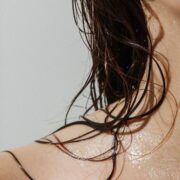





CURL STYLING / GEL
If your curls look incredible on wash day and completely different by tomorrow, your routine may be missing one thing: enough hold.
There is a very specific disappointment that happens when your curls look perfect at 10 a.m. and vaguely remember being styled by 6 p.m.
The definition was there.
The volume was there.
You took pictures.
And then everything slowly expanded, softened and separated until the hairstyle became more of a suggestion.
This is where gel earns its place.
Not because every curl needs to be frozen into position, and definitely not because soft hair is somehow a bad thing.
Gel is useful because softness and hold are two different jobs.
Your leave-in can make the hair feel beautiful. Your cream can give you slip. Your oil can add shine.
If you want the shape you created on wash day to still be recognizable tomorrow, something has to help hold it there.
The magic is in the film
Hair gel works largely through ingredients called film-forming polymers.
You apply the product while the hair is wet or damp, shape the curls, and then water begins evaporating as the hair dries.
The styling polymers stay behind.
They form a thin film around and between hairs that helps support the shape you created.
Cosmetic scientists can measure this in the lab. Styling polymers are tested for properties such as stiffness, flexibility and how well a curled section of hair keeps its shape as humidity rises.
The interesting part is that strong hold does not come from one thing alone.
Research on styling gels has found that the polymer needs to adhere well to the hair, but the film itself also needs enough internal strength to stay together.
That is why two gels that feel almost identical between your fingers can behave completely differently once your curls are dry.
One lasts through dinner.
The other leaves sometime after lunch.
Keeping curl clumps together longer.
Giving a wash-and-go more structure.
Helping definition survive humidity.
Stretching a good wash day into day two, three or beyond.
Think longevity, not just crunch.
The gel cast is doing exactly what you hired it to do
I understand why the crunch causes concern.
You conditioned your hair specifically so it would feel soft, and now your gel has dried into what appears to be a tiny protective shell around every curl.
Good.
That firmness can be evidence that the styling film has formed.
A cast helps keep the curl clumps relatively undisturbed while the hair finishes drying.
The key is not treating that crispy stage as the final hairstyle.
Once your hair is completely dry, cup sections in your hands and gently scrunch upward.
The curls should begin softening as the rigid film flexes and breaks.
You can shake the roots afterward if you want more volume.
What you do not need to do is aggressively rake through the entire hairstyle until there is no evidence gel was ever involved.
You wanted to soften the cast.
You did not need to dismantle the architecture.
The cast gets your curls through the drying stage. The soft curls underneath are the actual hairstyle.
A good gel routine starts before the gel
Gel works much better when it is not being asked to solve every hair problem by itself.
If your curls are tangled and rough, condition them first.
If they are drying faster than you can style them, add water.
If your hair is extremely dense, divide it into enough sections that the gel can reach the curls underneath.
Then apply your gel while the hair is still wet or damp enough for the product to spread easily.
For many curls, wetter application encourages larger clumps and easier distribution.
Use praying hands, glazing, raking, brush styling or whatever technique gives you the shape you like, then scrunch if your curls benefit from it.
And once a section looks good, let it be good.
Repeatedly brushing and rearranging partially drying curls gives the styling film a much harder job.
This is one reason the best gel application can look surprisingly uneventful:
Get it evenly through the hair, create the shape, and then stop styling.
You may not need the entire product tower underneath it
There is a common curly-hair logic that goes something like:
If one product is good, surely five coordinated products will be exceptional.
This is how a straightforward wash-and-go ends up with leave-in, cream, oil, mousse and gel before lunch.
Gel does not require that kind of support staff.
If your hair needs extra conditioning, leave-in + gel is a very good place to start.
If your curls love something richer, add a small amount of cream underneath.
If your rinse-out conditioner already left your hair beautifully soft, try the gel by itself.
That last experiment can be especially interesting for finer curls or anyone struggling with flat roots.
The gel may not be what is weighing the hairstyle down.
It may be everything you put underneath it.
Condition well.
Add leave-in only if your hair needs more softness or slip.
Apply gel evenly through wet or damp curls.
Shape the hair.
Dry completely.
Scrunch the cast soft.
That is already a full routine.
Humidity is where a really good gel shows off
Your bathroom is an extremely forgiving environment for hair.
The weather outside may have other plans.
Hair responds to moisture in the surrounding air. As humidity changes, so does the amount of water interacting with the fibre, which can affect the shape you set during styling.
The polymer film has to deal with that moisture too.
This is such an important part of hair styling that scientists and cosmetic formulators use high-humidity curl-retention testing specifically to see how well different styling systems perform.
And the newer research is interesting.
A 2025 study exposed several film-forming styling polymers to conditions relevant to curl-retention testing at 90 percent relative humidity. The films behaved very differently from one another, with the most mechanically stable polymer showing very little elongation after five hours under load.
Translation: some styling films are simply much better equipped for humidity than others.
So if your gel works beautifully in winter and suddenly seems useless in August, you have not necessarily forgotten how to do your hair.
The formula may simply not be giving you the humidity resistance you need.
That is when I would look for stronger hold or a product specifically designed around humidity resistance before adding another moisturizing layer.
More gel is not always more hold
There is a point where adding another handful stops being strategic and starts becoming expensive.
If you use too little gel for the amount of hair you have, you may get uneven hold. The outside curls look great while the underneath sections barely got product.
The answer is often better distribution, not automatically more gel.
Work in sections.
Add water if the product is getting difficult to spread.
Make sure the underneath hair is actually being coated.
Then judge your amount once everything is dry.
A very hard cast by itself does not necessarily mean you used too much.
Some formulas are designed to create a firm film.
But if your hair still feels gummy, coated or excessively heavy after you scrunch the cast out, reduce the amount next time.
If you are seeing white flakes, look at the products underneath it too. Two formulas can work beautifully separately and become deeply incompatible the second you introduce them.
There is also no prize for using maximum-hold gel when you do not need maximum hold.
Flexible-hold gels exist for a reason.
The amount of structure you want in the hairstyle is a personal preference, not an achievement level.
Your day-two hair is the real review
I would not judge a gel entirely by how your curls look five minutes after diffusing.
Most styling products can behave for a photograph.
I want to know what happened after you slept.
Did the clumps stay together?
Did the crown keep some shape?
Can you shake the roots, fix two front curls and continue with your morning?
Or does the hairstyle require so much water and product that you have effectively started wash day again?
That is the difference between definition and useful definition.
Laboratory testing of hair-styling products looks at more than immediate appearance for the same reason. Researchers measure stiffness, curl retention and performance under environmental stress because a styling product is supposed to keep doing something after it dries.
For day two, give the hair a minute before refreshing it.
Take down your nighttime style, shake the roots and let the curls settle.
Then re-wet only the sections that genuinely lost their shape.
A good gel should make you need less intervention, not create a new styling appointment every morning.
Soft curls and lasting curls can absolutely coexist
This is the gel reputation I would retire.
Hold does not have to mean hair you are afraid to touch.
Modern styling polymers can be formulated for different balances of stiffness, flexibility, humidity resistance and sensory feel. Research across gels, creams and other styling formats has found exactly that: different formulas produce different combinations of hold, shine and curl control.
So if you hate a hard cast, try a more flexible gel.
If flexible gel disappears too quickly, move up in hold.
If you want serious longevity but still love soft hair, use the stronger gel and scrunch the cast once it is dry.
The goal is not finding the most powerful gel you can tolerate.
It is finding the one that leaves your curls looking the way you like for as long as you want them to.
Because when the conditioner has softened the hair, the styling is done and the curls look exactly right, gel is the thing that helps tomorrow remember what happened today.
Disclaimer: This article provides general hair-care information and is not a substitute for advice from a dermatologist or other qualified healthcare professional. Persistent breakage, scalp changes or sudden hair loss should be evaluated by a healthcare professional.